
Regenerative grazing systems give farmers and ranchers a practical way to restore degraded pastures while continuing to raise livestock. Instead of allowing animals to remain in one area and repeatedly graze the same plants, you control where they graze, how intensely they graze, and how long the pasture rests afterward.
This approach changes the role of livestock. Your animals are no longer simply consuming forage. When you manage them carefully, they can help cycle nutrients, stimulate plant growth, improve soil cover, and support pasture recovery.
However, regenerative grazing is not a single formula that works the same way everywhere. You must adjust stocking density, grazing duration, and recovery periods according to your soil, climate, rainfall, plant species, and livestock needs.
What Is Regenerative Grazing?
Regenerative grazing is a pasture-management approach that uses planned livestock movement to improve the health and productivity of the land.
You divide your grazing area into smaller paddocks and move livestock between them according to forage conditions. Animals graze a paddock for a relatively short period and then leave it undisturbed while the plants recover.
This practice may also be called:
- Rotational grazing
- Adaptive grazing
- Managed grazing
- Management-intensive grazing
- Prescribed grazing
- Adaptive multi-paddock grazing
Although these systems differ in their details, they share one central principle: you match livestock movement with the recovery needs of the pasture.
The USDA Natural Resources Conservation Service describes prescribed grazing as managing livestock according to the rate and timing of plant growth, available forage, animal needs, and conservation goals.
Why Continuous Grazing Can Damage Pastures
Under continuous grazing, livestock remain in the same pasture for an extended period. Animals often return to their favorite plants and graze the new leaves before those plants have rebuilt their energy reserves.
When this happens repeatedly, desirable forage plants become weaker. Their root systems may shrink, their growth may slow, and less desirable or grazing-tolerant species may begin to dominate.
Continuous pressure can also lead to:
- Reduced plant cover
- More exposed soil
- Uneven manure distribution
- Soil compaction around water and shade
- Lower forage production
- Greater erosion risk
- Increased weed pressure
The problem is not simply that animals graze the land. The real problem is grazing plants again before they have recovered.
Controlled Grazing Pressure Protects Plant Health
Regenerative grazing gives you greater control over grazing pressure.
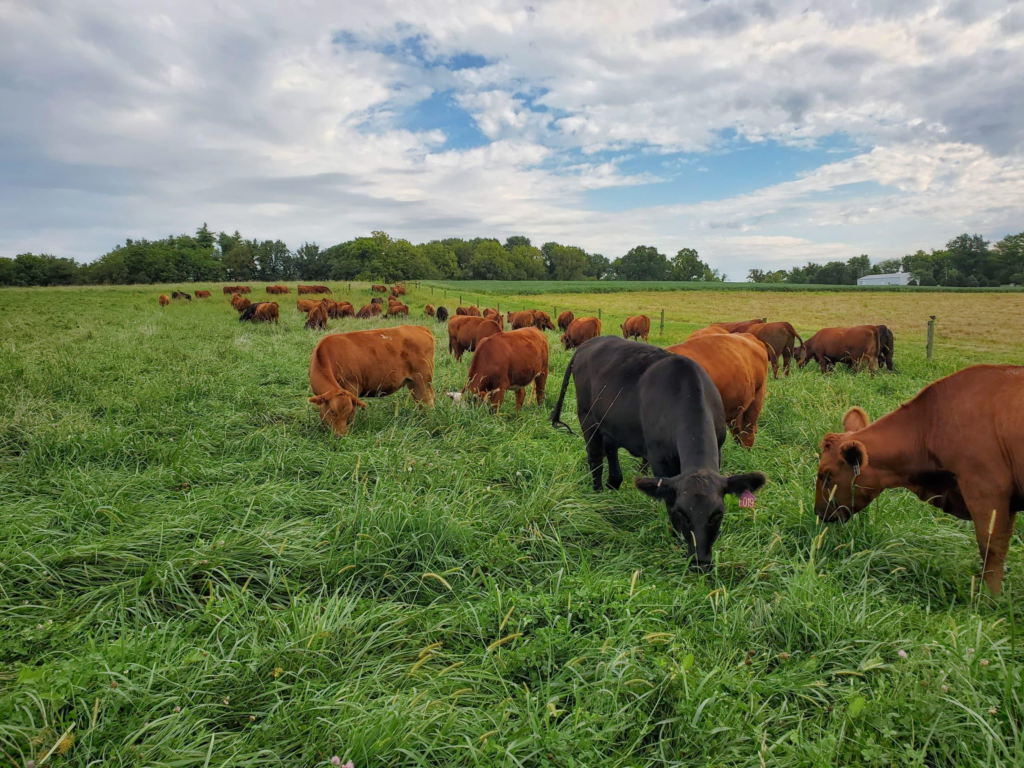
You place livestock in a defined paddock, allow them to consume an appropriate portion of the available forage, and move them before they begin repeatedly grazing fresh regrowth.
Short grazing periods can improve forage use because animals have less opportunity to selectively graze only their favorite plants. Livestock may also trample some plant material onto the soil surface, where it can serve as protective litter.
That surface cover can help:
- Protect the soil from direct sunlight
- Reduce evaporation
- Limit erosion
- Moderate soil temperature
- Provide organic material for soil organisms
You should not assume that higher stocking density automatically improves the land. Stock density must match forage availability, soil moisture, livestock behavior, and your pasture objectives. Excessive pressure—especially on wet soil—can cause compaction and plant damage.
Recovery Time Drives Pasture Regrowth
Recovery time is one of the most important parts of a regenerative grazing plan.
After grazing, plants need time to rebuild their leaves and restore energy to their roots. When you allow adequate recovery, plants can resume photosynthesis, produce new growth, and maintain stronger root systems.
When you return livestock too quickly, plants must repeatedly use stored energy before they have fully replenished it. Over time, this weakens the pasture.
You should base recovery periods on plant growth rather than following the same calendar schedule throughout the year. Fast-growing spring pasture may recover relatively quickly, while the same pasture may need much longer during hot, dry, or dormant conditions.
USDA guidance shows that rest periods can vary substantially with season, forage type, climate, and growth rate. This is why observation and adaptive decision-making matter more than a rigid rotation schedule.
Before returning animals to a paddock, look at:
- Leaf development
- Plant height
- Forage density
- Soil moisture
- Recent rainfall
- Seasonal growth rates
- The condition of desirable plants
Let the pasture tell you when it is ready.
Livestock Movement Improves Nutrient Distribution
Livestock return nutrients to the land through manure and urine. When animals remain near one water source, shade tree, feeding area, or barn, those nutrients become concentrated in a few locations.
Rotational movement can spread livestock more evenly across the landscape. As a result, manure and urine may also become more evenly distributed.
This natural nutrient cycling can support plant growth and reduce the number of nutrient-rich and nutrient-poor zones within a pasture.
You can improve distribution further by carefully positioning:
- Water systems
- Mineral feeders
- Temporary fences
- Shade structures
- Supplement stations
Move these resources when practical so animals do not continuously gather in the same place.
Regenerative Grazing Supports Soil Biology
Healthy soil contains bacteria, fungi, protozoa, nematodes, earthworms, arthropods, and many other organisms. These organisms help decompose organic material, cycle nutrients, form soil aggregates, and support plant growth.
The Food and Agriculture Organization’s Soil Biodiversity Portal explains that soil biodiversity includes microscopic organisms, larger soil animals, and plant roots interacting throughout the soil ecosystem.
Managed grazing can support this biological community by maintaining living roots, encouraging plant regrowth, and returning organic material to the soil. Growing plants release carbon-rich compounds through their roots. These compounds help feed microorganisms living near the root zone.
Manure, plant residue, and trampled forage also provide organic inputs. However, grazing will only support soil biology when you prevent prolonged overgrazing, excessive compaction, and large areas of bare soil.
Stronger Plants Develop Deeper Roots
Plants need healthy leaves to capture sunlight and produce energy. When animals repeatedly remove too much leaf area, plants have less energy available for root growth.
By giving grazed plants enough time to recover, you allow them to rebuild aboveground growth and maintain more extensive root systems.
Deeper and healthier roots can help pastures:
- Reach water stored deeper in the soil
- Access a larger supply of nutrients
- Survive dry periods more effectively
- Hold soil together
- Contribute organic matter below ground
- Recover more quickly after stress
You should avoid grazing plants so severely that they lose most of their photosynthetic capacity. Leaving adequate residual forage helps plants recover and keeps the soil protected.
Plant Diversity Builds a More Stable Pasture
A diverse pasture may contain grasses, legumes, broadleaf plants, and native species with different growth habits and root structures.
This diversity gives you several advantages. Some plants grow best during cool weather, while others thrive in warmer conditions. Some have shallow roots, while others reach deeper into the soil. Legumes can contribute biologically fixed nitrogen, while flowering plants may provide habitat for pollinators and beneficial insects.
Greater diversity can help create:
- A longer grazing season
- More balanced animal nutrition
- Improved soil coverage
- Better drought tolerance
- More varied root activity
- Greater ecological stability
You do not need to eliminate every plant that you did not intentionally seed. Instead, identify what is growing, determine whether it supports your goals, and manage the pasture to favor desirable species.
The Sustainable Agriculture Research and Education program provides educational materials and producer-focused research on rotational grazing, cover crops, and soil-health practices. Research highlighted by SARE has shown that combining diverse cover crops with rotational grazing can improve several indicators of soil health over time.
Healthy Pastures Improve Water Infiltration
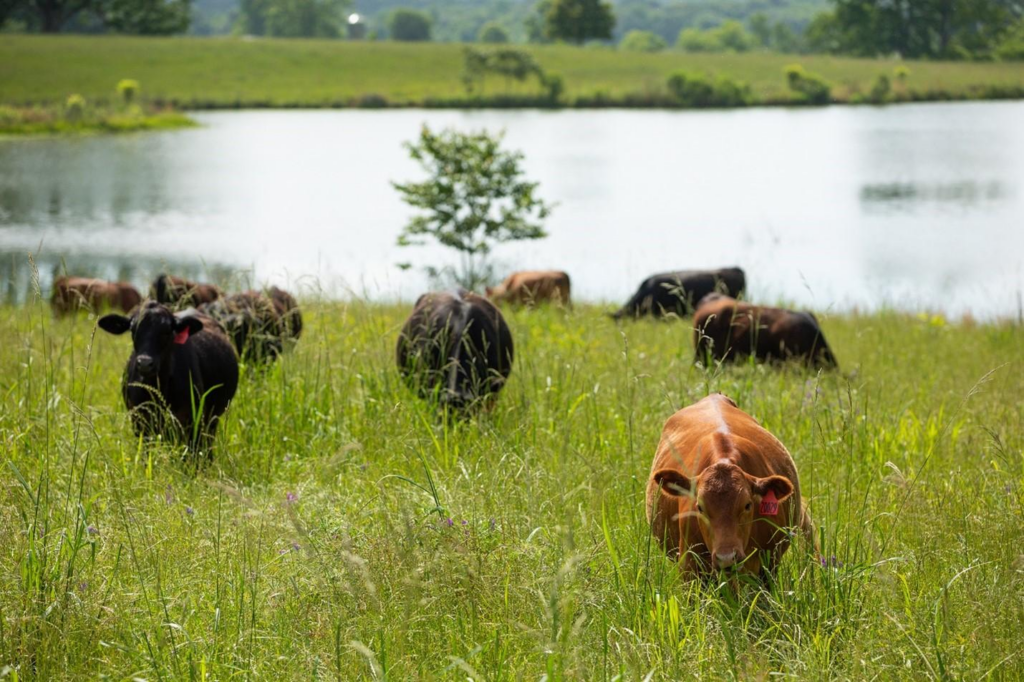
Bare or compacted soil often sheds water during heavy rainfall. Instead of entering the soil, water moves across the surface and may carry soil particles, nutrients, and organic material away from the pasture.
A well-covered pasture slows that water down.
Leaves and plant litter reduce the force of raindrops, while roots create pathways that can help water enter the soil. Improved soil aggregation may also increase the amount of pore space available for water movement and storage.
Better infiltration can:
- Reduce runoff
- Limit erosion
- Keep more moisture in the root zone
- Support plant growth between rain events
- Improve resilience during drought
- Reduce sediment movement into waterways
You can learn more about soil-cover and water-management principles through the USDA Natural Resources Conservation Service.
How to Start a Regenerative Grazing System
You do not need to redesign your entire farm immediately. Begin with a manageable area and improve the system as you learn.
1. Evaluate your pasture
Walk the land and record current conditions. Look for bare soil, compacted areas, erosion, plant diversity, weed pressure, forage height, and uneven grazing.
Take photographs from fixed monitoring points so you can compare changes over time.
2. Estimate available forage
Determine how much usable forage the pasture currently provides. Do not calculate your stocking rate from acreage alone. Ten acres of productive pasture may support more grazing than a much larger area of degraded or drought-stressed land.
3. Create smaller paddocks
Use permanent or temporary fencing to divide larger pastures. Portable electric fencing allows you to adjust paddock size as forage conditions change.
4. Improve livestock water access
Provide reliable water without forcing animals to walk excessive distances or gather in one location. Portable tanks and movable water lines can make rotational grazing easier.
5. Set clear grazing targets
Decide how much forage animals should consume and how much residual plant material you want to leave behind.
Your target will depend on the plant species, season, soil conditions, and recovery goals.
6. Move animals before plants are regrazed
Watch for animals beginning to bite newly grazed plants again. That is often a sign that you have kept them in the paddock too long.
7. Allow full recovery
Do not return simply because the next paddock appears on a calendar. Return when the plants have recovered sufficiently.
8. Monitor and adjust
Track forage production, animal condition, soil cover, infiltration, plant diversity, and paddock recovery.
Regenerative grazing is an adaptive process. You observe the results, learn from them, and change your management accordingly.
Common Regenerative Grazing Mistakes to Avoid
Even a rotational system can damage pasture when it is poorly managed.
Avoid these common mistakes:
Following a fixed rotation without observing plant growth
Pastures recover at different rates during different seasons. Change your schedule when rainfall and temperature change.
Keeping animals in a paddock too long
Long stays allow animals to graze new regrowth. Use smaller paddocks, more frequent moves, or lower animal numbers when necessary.
Returning before recovery is complete
Moving livestock does not help if you bring them back too quickly.
Using too many animals for the available forage
High stock density and overstocking are not the same thing. Stock density describes how tightly animals are grouped at one moment. Stocking rate describes how many animals the land supports over time.
Ignoring drought conditions
When plant growth slows, extend recovery periods, reduce grazing pressure, use stored feed, or reduce animal numbers before pasture conditions deteriorate.
Expecting identical results everywhere
Climate, soil, rainfall, plant communities, animal species, and management skill all influence outcomes. A system that works on one ranch may require significant modification on another.
Regenerative Grazing Is a Management Process
Regenerative grazing works best when you treat it as an ongoing decision-making process rather than a fixed technique.
Livestock can contribute to pasture restoration, but they do not restore land automatically. Your management determines whether grazing stimulates healthy regrowth or causes further degradation.
When you control grazing pressure, protect recovery periods, maintain soil cover, and monitor pasture conditions, you can begin moving your land from an extractive system toward a more resilient one.
Over time, well-managed pasture may support healthier plants, stronger root systems, better water infiltration, more biological activity, and more dependable forage production.
Take the Next Step Toward Healthier Pastures
You can begin restoring your pasture with one practical change: observe how your plants respond after grazing.
Start with a small group of animals or a limited section of pasture. Measure forage conditions, plan your livestock moves, allow adequate recovery, and document what happens. Each grazing cycle will teach you more about the needs and potential of your land.
To explore more practical ideas for regenerative agriculture, ecological land management, sustainable business, and environmental restoration, visit the Ecolonomic Action Team Community.
Join the EAT Community and connect with people who are working to make a little money while making the planet better.
Resources and Related Articles
- Ecolonomic Action Team Community – Articles, webinars, interviews, and community resources related to regenerative agriculture and environmental business.
- USDA NRCS Grazing Management Standard – Technical information about managing the timing, intensity, frequency, and duration of grazing.
- USDA NRCS Pasture Resources – Pasture-management information and conservation assistance for landowners.
- Sustainable Agriculture Research and Education – Research-based guides for grazing, soil health, cover crops, and sustainable farm management.
- FAO Soil Biodiversity Portal – Information about soil organisms and their role in healthy agricultural ecosystems.
- FAO Livestock and the Environment – Global resources covering livestock, natural resources, biodiversity, and environmental management.
- FAO Global Assessment of Soil Carbon in Grasslands – Information about grassland soil carbon and sustainable grazing management.
- Southern SARE: Rotational Grazing and Soil Health – A summary of research involving cover crops, rotational grazing, and soil health.
References
- Natural Resources Conservation Service. “Grazing Management, Conservation Practice Standard Code 528.” U.S. Department of Agriculture.
- Natural Resources Conservation Service. “Management Intensive Rotational Grazing.” U.S. Department of Agriculture.
- Natural Resources Conservation Service. “Grazing Management and Soil Health.” U.S. Department of Agriculture.
- Food and Agriculture Organization of the United Nations. “Soil Biodiversity.”
- Food and Agriculture Organization of the United Nations. “Livestock and the Environment.”
- Food and Agriculture Organization of the United Nations. “Global Assessment of Soil Carbon in Grasslands.”
- Sustainable Agriculture Research and Education. “Cover Crops Incorporated into Rotational Grazing Improves Soil Health.”
- O’Grady, A. P., et al. “Grazing Systems and Natural Capital: Influence of Grazing Management on Biodiversity and Ecosystem Services.” Global Ecology and Conservation, 2024.
Recent Comments